race

race

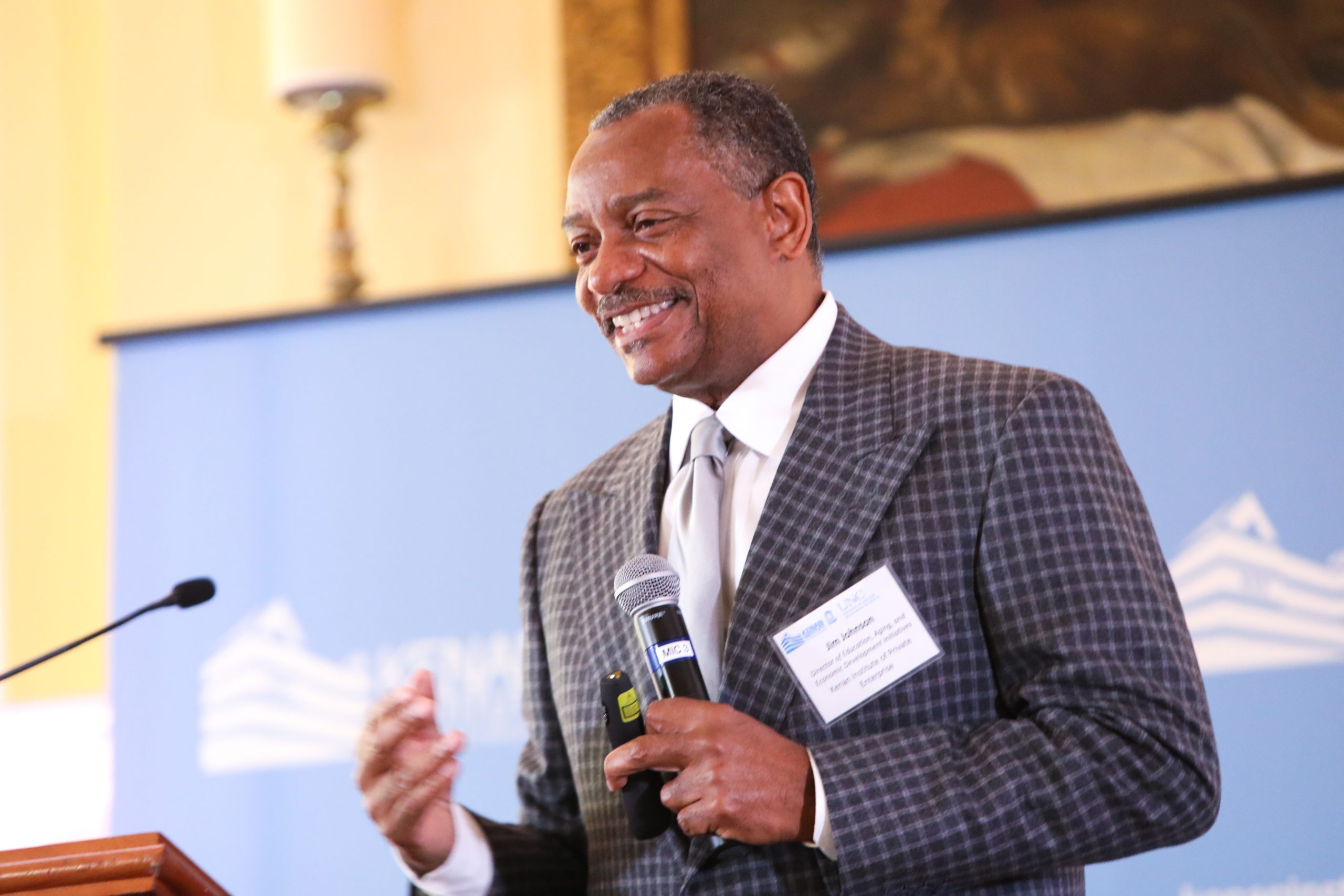
Jim Johnson

New Executive Order Focuses on Vulnerable Communities

On Jan. 7, North Carolina Gov. Roy Cooper announced a sweeping new executive order that aims to achieve net-zero emissions within 30 years while protecting and empowering North Carolina’s underserved communities. Urban Investment Strategies Center Director Jim Johnson, who serves as chairman of the N.C. Department of Environmental Justice and Equity Board and as a member of the task force on social, economic and environmental equity, accompanied Cooper at a press conference in support of the order at N.C. A&T State University. Read Johnson's statements here.


Biden’s Build Back Better: A Brighter Future for Black Families?

Biden’s Build Back Better: A Brighter Future for Black Families?

While the COVID-19 pandemic was devastating for many, research shows its impact was not felt equally. Black Americans experienced disproportionate health and economic ramifications, which compounded the financial, social and psychological strain many felt pre-pandemic, and have contributed to growing inter-generational wealth disparities. In today’s Kenan Insight, our experts explore whether the multi-trillion dollar “Build Back Better” plan proposed by the Biden administration holds the potential to begin closing pervasive gaps in American society.

Nursing

Establishing Reputational Equity for the Nursing Profession

The nursing profession in the United States was experiencing a labor shortage and facing diversity and inclusion challenges prior to the COVID-19 pandemic. Magnifying these problems was a shift in the nation’s population, both geographically and demographically. The result was changes in both where nurses are needed in the healthcare system and the nursing skill set required to address healthcare needs of a far more diverse clientele of patients—in terms of race, ethnicity, sex, gender identity, age, living arrangements, socioeconomic status and primary language.

A Strategic Response to the Coronavirus Pandemic for the African American Working Poor

A Strategic Response to the Coronavirus Pandemic for the African American Working Poor

The coronavirus pandemic has been especially traumatic on our country’s African American working poor. From being disproportionately concentrated in low-wage hospitality and service sector jobs to struggling with caregiving and food insecurity issues due to shuttered daycare facilities and food banks, working-poor African Americans are facing an inequitable share of financial, social and psychological challenges. What can be done to ease the burdens of working-poor African Americans, both during the pandemic and moving forward? In this Kenan Insight, Urban Investment Strategies Center Director and William R. Kenan Jr. Distinguished Professor of Strategy and Entrepreneurship Jim Johnson invokes a little-known federal program, the Southeast Crescent Regional Commission (SCRC), as part of a strategic response to providing a coherent, place-based development plan.